Vallée’s Control System, Revisited
A Founding Concept Under New Scrutiny
As part of the 2025 SOL Foundation Forum, sociocultural anthropologist Dr. Peter Skafish interviewed Jacques Vallée. The result was a wide-ranging conversation on the state of UAP research. The excerpt below, drawn from that discussion, returns to an idea Vallée has spent nearly five decades developing—and one that sits close to the analytical core of xenopolitics itself: the hypothesis that the UAP phenomenon does not merely appear to us, but acts on us. That it functions as a system of communication, conditioning, and control.
Vallée first advanced this idea in print in Messengers of Deception (1979), where he proposed that a substantial fraction of UFO contact reports were better explained not by extraterrestrial visitation but by a mechanism operating on human belief systems—one that produced predictable psychological and social effects in the people who encountered it, regardless of what the phenomenon actually was. The groundwork had been laid a decade earlier in Passport to Magonia (1969), which first drew the throughline between UFO folklore and older traditions of contact with non-human entities. But it was in Messengers of Deception that Vallée named the mechanism explicitly: a control system, not necessarily designed by anyone, but functioning nonetheless—shaping outcomes the way a traffic signal or an institution shapes behavior, without requiring a single visible author.
In the excerpt below, Vallée sharpens that argument considerably. He distinguishes a natural system from an artificial one, and—more importantly for xenopolitics—an open system from a closed one: the difference between a phenomenon we can potentially interrogate and communicate with, versus one that is simply being imposed on us, with humanity cast in the role of subject rather than participant. This is, in essence, the strategic question at the center of the containment problem: are we dealing with a system that permits negotiation, or one that does not?
To make the stakes of that distinction concrete, Vallée turns to Jacques Bergier—the French chemist, resistance intelligence operative, and co-author (with Louis Pauwels) of The Morning of the Magicians (1960), the book that helped launch postwar esoteric and paranormal literature into the mainstream. Bergier’s wartime work as one of the scientific spies who helped locate the V-2 rocket program at Peenemünde, and his subsequent survival of Nazi concentration camps, gave him a firsthand education in what it means to live inside a system whose rules are neither disclosed nor optional. Vallée uses Bergier’s account of the camps—a story with an unsettling epistemological punchline—to reframe the control system hypothesis in the starkest terms available: not as metaphor, but as a lived structure of confinement, instruction, and consequence.
What follows is Vallée’s own account, transcribed from that video conversation (below excerpt), edited slightly for readability and clarity. The point he is raising below is vitally important—which is why we are highlighting it here.
Time stamp 27:45
Dr. Peter Skafish: …One of your core ideas, to summarize it, is that UAP aren’t what we think they are, that they’re a kind of system that’s in communication with us and is trying to, according to you, instruct us or condition us, to educate us in a sense so that we become different by virtue of experiencing them. And you say that UAP may be one system of communication in a broader meta system. I think by that you mean that the system of communication or symbols changes over time and it changes in response to human thought. So a member of SOL…raised the question: do you see new evidence for this hypothesis? Is there evidence that maybe the system is dealing with us differently?
Dr. Jacques Vallée: So that [hypothesis] resulted from discussions I had actually back in France. From the beginning, when I started building the databases based on French cases and cases in Europe—not American cases especially, although there were a few that had been published in books by Donald Keyhoe and some others. In discussing it with people in the Sorbonne and people in French universities, the idea of, “Is it a control system?” came up. That’s the question that any scientist should ask—what is it? I mean, we don’t have one or two or 10 or 20 or 100 cases, we have many thousands of cases. So it’s doing something. It’s not hiding. It’s in fact in full view. There are many cases where somebody’s driving on the highway and something lands in front of the car. So this is not somebody hiding. This is very much in your face. So the idea that came out of our conversations [was], “Is it a control system?” But people have misunderstood what I meant by that, in my books published in the 80s and so on. I’ve continued to work on this because that’s one of the things that a good computer AI study could give us an answer to. So that’s one of the purposes of bringing AI into it.
Now a control system is not necessarily something that humans are designing—like a set of signals on the roads is a control system. We have, you know, green lights and red lights, and we have different signals that tell you how to drive around and so on. And that’s a control system. But we have lots of things around us. You know, a university is a control system. You don’t necessarily know the rules, you have to discover the rules. I certainly remember as a PhD student—what does it mean to become a doctor in science? How do you do it? Well, there is no recipe. There’s nothing that says if you take this course and this course, and you pass them, then you become a doctor. That’s not true. You have to find an environment, you have to find a subject, you have to design new research and so on. So there are a number of things around us that are control systems that we take for granted.
Jacques Bergier, who was an extraordinary French philosopher, writer and publisher—during World War II he had been a spy, one of the first scientific spies of our time. He was looking for heavy water and he was looking for the place where the V2 rockets were being built. He was one of the spies that located Peenemünde. He told me, you know, a concentration camp is a control system. I mean it’s like a prison. There is a fence and you cannot go out. If you try to get out you will be killed. As you may know, he was captured by the Germans. He was tortured a number of times and was very lucky to finally survive World War II. And he survived with a fairly amazing sense of humor. That helped him keep his intelligence and his mind through what he suffered. And he said in the camp where he was interned—one of them, Mauthausen—one time they were astonished to see that the SS, the Germans, were bringing in the firemen from Munich. The firemen had decided to go on strike in the middle of World War II. And the Germans didn’t like that, and they arrested them and put them in the concentration camp with the French and American prisoners. They kept them there for three weeks, and then they released them. And he said, “That’s when I understood that a concentration camp could be a university, that you could go there without knowing why and you would learn something. You may or may not come out, or you may or may not be killed, or you may or may not be burned to death—the system will control that.”
Okay. So he said the question you have to ask about UFOs is, number one, is it a natural system or an artificial control system? And if it is a control system, is it open or closed? In other words, are we being taken over by a species from somewhere in space that’s vastly more intelligent than we are? You know, as Dr. Nolan says, by people who have had 10 scientific revolutions or a hundred or a thousand, and they come here with superior science to do something, in which case it’s a closed system. We are like prisoners. I mean, is something going to happen to us and there is very little we can do? Or is it an open system where we can in fact communicate with it? And if we can communicate with it, then the question for me, as an information scientist, is what are the modalities of the interaction? It’s not just, can we learn their language? They say, you know, we come in peace to save mankind or something. Or we will give you the cure for cancer or something. I don’t think it’s at that level. I think it’s a meta system. Or it’s not a system and that’s my fear.
[Timestamp 45:55]
… You know, there is a sense of humor in all the manifestations of UFOs—a sense of humor at a level which is difficult for us to accept because we have very little opportunity to respond. It will choose its own time. It will choose the most unusual—I mean, they have that at the Utah ranch [Skinwalker Ranch], things happen all of a sudden, right in front of you, in front of your car and with that element of surprise and sometimes an element of humor which I think is indicative of a system that’s at a different level from us, but that understands humor. I find that encouraging. At least we have that in common with them…. Well, if you think that we are in a control system, what you need to do is disturb it. You know, you can disturb an environmental system [like a thermostat control system] by lighting a fire or by changing a dial and then observing what happens. So, we have to think of experiments we can do to disturb the UFO UAP phenomena, not just observe it and document it.
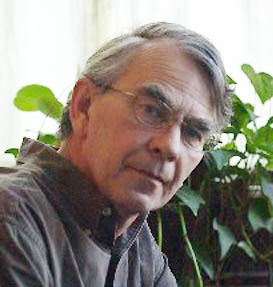
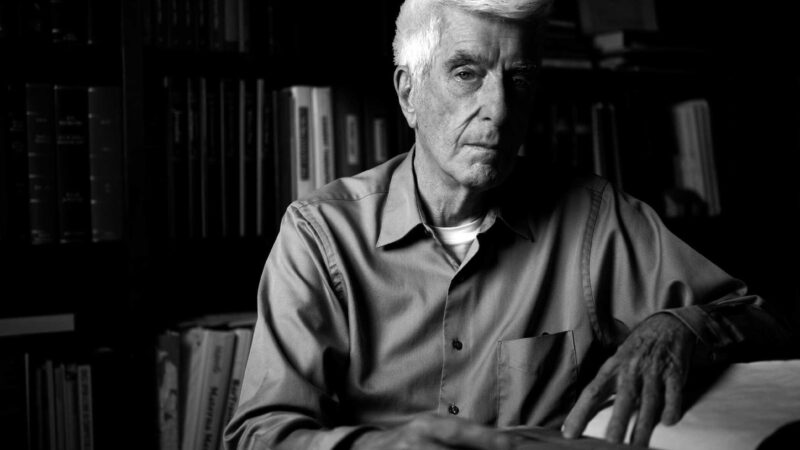
Top Photo Jacques Vallée
By Cmichel67 – Own work, CC BY-SA 4.0Full SOL Foundation Forum Interview on YouTube: