The Tools of Xenopolitics
A Framework for the Post-Disclosure Age
by Blake Harris
I. The Question Disclosure Doesn’t Answer
The confirmation that Non-Human Intelligence is real and has been interacting with humanity has produced something unexpected: not clarity, but a deeper and more consequential confusion.
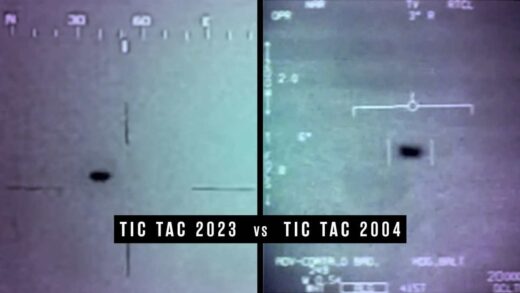
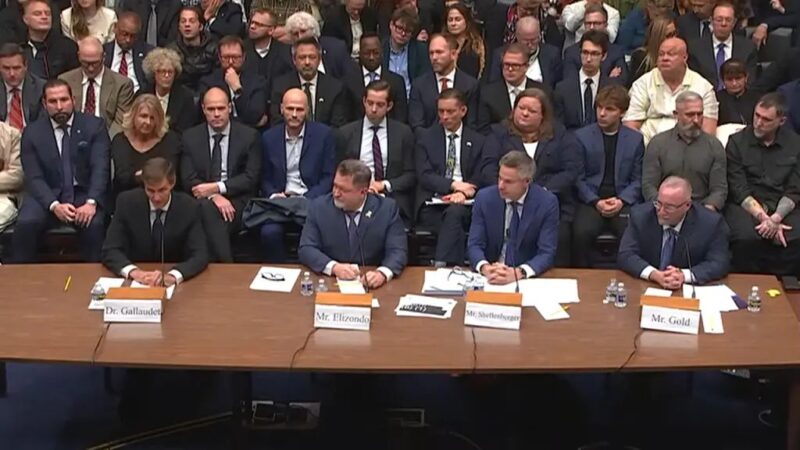
For decades, the central debate in UAP research was existence. Are they real? Is the government hiding something? Do the objects performing impossible maneuvers in restricted military airspace represent technology beyond our own? Those questions now have answers—partial, contested at the margins, still without the definitive physical confirmation that scientific consensus would require, but answers that have crossed a threshold serious analysts cannot responsibly ignore. Credible military witnesses have testified under oath before Congress. Classified programs with substantial budgets have been acknowledged. The Director of National Intelligence has filed reports confirming UAP as a genuine national security concern. High-quality military observations — radar returns, FLIR footage, corroborated eyewitness accounts from trained observers—have accumulated to the point where the burden of proof has shifted.
This does not mean the existence question is formally closed. No downed craft has been produced for public, peer-reviewed examination. No communicated message has been independently verified. In strict evidentiary terms, the case remains incomplete. But in strategic terms, the evidence has reached a threshold of credibility that compels serious analytical preparation—regardless of whether final, irrefutable public proof has been attained. Responsible strategic analysis does not wait for certainty before beginning to assess implications. It asks: given what we can credibly establish, what do we need to understand next?
Which brings us to the question that the existence debate has obscured for eighty years: now what?
Not what are they—though that remains important. But who are they, in the sense that actually matters: what do they want, how do they operate, and what does the full weight of their documented behavior reveal about the nature of their relationship with humanity? These are not scientific questions. They are not questions that better sensor technology or higher resolution footage will answer. They are strategic and political questions—questions about agency, intention, and the dynamics of a relationship between parties whose interests may not align and whose capabilities are anything but equal.
The disclosure conversation has not produced tools adequate to those questions. Journalism and science are indispensable to the investigation—journalism as the open-source intelligence gathering that documents what is observable, science as the analytical engine that examines physical evidence. But they are collection mechanisms, not strategic frameworks. The gap they leave is not in data. It is in synthesis—he assessment of what the accumulated data means for a relationship that appears to involve, on one side, a strategic intelligence with concealed objectives, and on the other, a humanity that has only recently begun to recognize it is in a relationship at all.
An earlier attempt to fill that gap—Exopolitics, which emerged in the early 2000s—identified the right problem. Its most serious practitioners recognized that NHI contact demanded political and strategic analysis, not merely scientific cataloguing. A small academic wing produced genuinely rigorous work: notably, the 2008 paper “Sovereignty and the UFO,” in which Alexander Wendt—a foundational figure in International Relations theory—applied constructivist IR analysis to the contact question, arguing that confirmed NHI presence would fundamentally rupture the state-centric assumptions on which modern governance rests. That work deserves acknowledgment as a legitimate predecessor to what xenopolitics is attempting.
But Exopolitics as a field was captured. Reliance on unverifiable insider claims, an uncritical appetite for dramatic testimony, and what serious researchers now recognize as likely deliberate disinformation operations seeded into its most active communities compromised its analytical foundations beyond recovery. The academic impulse was sound. The methodology was overwhelmed by what surrounded it—leaving the strategic questions about NHI contact still without a rigorous framework capable of answering them.
Xenopolitics is that framework. The subject—and the term—traces back to Rudolf Kjellén, the Swedish political scientist who originally coined “geopolitics”—the core word that later gets extended in “xenopolitics.” It inherits the legitimate analytical ambitions of the best Exopolitics work while building on a methodological foundation designed to resist the contamination that derailed its predecessor. It does not begin with assumptions about NHI intentions, nature, or origin. It begins with documented behavior and asks what that behavior reveals—using the analytical tools that have proven most effective for understanding the strategies of intelligent actors whose intentions are deliberately concealed and whose operations appear designed to resist exactly this kind of scrutiny.
It begins, in other words, where disclosure ends.
One further limitation deserves explicit acknowledgment at the outset, because intellectual honesty requires it and because failing to acknowledge it would undermine the credibility of everything that follows.
Xenopolitics works from the open-source record—the publicly available evidence of government programs, declassified documentation, credible witness testimony, and serious independent investigation. What that record contains is substantial. What it does not contain may be more substantial still.
The weight of credible insider testimony—from David Grusch’s congressional statements to the published accounts of former program directors—points toward a classified UAP infrastructure considerably more extensive than anything publicly acknowledged. It is not merely possible but probable that select individuals within compartmented government programs have established ongoing relationships with Non-Human Intelligence and possess detailed knowledge of their intentions, civilizational structure, and operational presence on Earth that the open-source record can only approach through inference.
Xenopolitics does not pretend otherwise. It is, in this respect, an open-source analytical discipline working at the frontier of what is publicly knowable—aware that a classified picture may exist that would render some of its conclusions obvious and others incorrect. That awareness is built into the framework as a methodological discipline: conclusions are held provisionally, the classified dimension is acknowledged rather than ignored, and the open-source analysis is understood as an approximation of a fuller picture that may one day become available.
What this limitation does not do is render the framework unnecessary. Open-source strategic analysis has a specific and irreplaceable function even when classified channels exist—a point the closing section of this essay returns to.
II. The Analytical Foundation: Strategic Studies, Competing Wills, and the Limits of Human Categories
Xenopolitics does not emerge from thin air. It applies an existing and respected analytical tradition to a domain that tradition has not previously been asked to address.
Strategic Studies is an established interdisciplinary academic field taught at war colleges, defense academies, and major universities worldwide. At its core, as scholars Isabelle Duyvesteyn and James Worrall define it, Strategic Studies examines “the ways in which military power and other coercive instruments may be used to achieve political ends in the course of a dynamic interaction of at least two competing wills.” It draws on political science, international relations, sociology, psychology, anthropology, history, and the sciences—not because strategy is vague enough to require everything, but because the behavior of intelligent actors pursuing contested objectives is genuinely complex enough to demand it.
That framework was developed to analyze conflict and competition between human actors. Its central concept—the dynamic interaction of competing wills—assumes, at least implicitly, that both parties operate within a broadly shared framework of causality, resource constraint, and comprehensible motivation. Applied to NHI, that assumption cannot be made without examination. An intelligence that may experience time non-linearly, operate with cognitive architecture fundamentally unlike our own, or pursue objectives that fall entirely outside human categories of interest and value cannot be automatically treated as a strategic actor in the Clausewitzian sense.
Xenopolitics acknowledges this directly. It proceeds under what might be called strategic agnosticism—treating NHI as a strategic actor with intentional behavior and pursuable objectives, while simultaneously building in the analytical discipline to recognize when that assumption is breaking down. The framework uses human strategic categories as the most rigorous available starting point, not as a guaranteed fit. Where NHI behavior consistently evades those categories—where the pattern of action resists every conventional strategic explanation—that evasion is itself treated as a finding rather than a reason to abandon the analysis.
With that caveat established, the Strategic Studies framework applies to the NHI question with considerable force. Consider what the documented evidence of NHI interaction with humanity actually describes when read without prior assumptions about benevolence or hostility: a sustained, adaptive, multigenerational pattern of behavior directed at human populations, involving systematic management of information, deliberate manipulation of perception and belief, and—as we will examine shortly—what serious government-contracted research identified as direct interaction with human consciousness. Two parties. Radically asymmetric capabilities. Behavioral objectives that remain officially unacknowledged but are increasingly visible in the pattern of the evidence.
This is not a phenomenon to be catalogued. It is a strategic relationship to be analyzed.
The Strategic Studies framework immediately clarifies why the gap in existing approaches exists. Journalism documents incidents. Science investigates phenomena. Neither discipline is designed to synthesize across the full behavioral record and ask what an intelligent actor with concealed objectives is trying to achieve—or what the pattern of that actor’s behavior, read across sufficient time and scale, reveals about the nature of its relationship with humanity.
That synthesis is what xenopolitics is designed to produce. Applied to the NHI question, the framework produces an immediate and significant reorientation. The disclosure conversation has largely treated humanity as an observer—watching, investigating, eventually to be informed by a government that has been withholding what it knows. The xenopolitical framework treats humanity as a party—one side of a strategic relationship that has been actively managed by the other side for reasons that the evidence, examined carefully, begins to reveal.
That reorientation changes every question worth asking.
III. The Methodological Toolkit: What Xenopolitics Actually Does
A framework is only as useful as the tools it deploys. Xenopolitics draws on several distinct analytical methodologies, each contributing something the others cannot. Together they form an investigative toolkit designed for a subject that has defeated every single-discipline approach applied to it—not by accident, the evidence increasingly suggests, but by design.
Intelligence Analysis: Reading Behavior When Intent Is Concealed
The most immediately applicable tool in the xenopolitical toolkit is not academic but operational: the methodology of professional intelligence analysis.
Intelligence analysis was developed specifically for the problem xenopolitics faces—understanding the intentions and capabilities of an actor that is actively working to prevent exactly that understanding. It works in the space between evidence and conclusion, asking what observed behavior most plausibly reveals about concealed objectives. Crucially, it treats journalism and science not as competitors but as its primary collection arms—open-source intelligence gathering and physical evidence analysis feed the strategic assessment rather than substitute for it.

Its core methodologies translate directly to NHI investigation. Behavioral pattern analysis examines what an actor consistently does across time and circumstance, on the principle that sustained patterns reveal strategic objectives more reliably than any individual action. Denial and deception analysis examines not just what an actor does but how it manages what observers can see—recognizing that the structure of a concealment operation is itself analytically revealing, often more so than the thing being concealed. Intent inference builds from observed capability and behavior toward the most parsimonious explanation of what an actor is trying to achieve, while remaining open to revision as the evidence base develops.
Each of these tools applies directly to the NHI behavioral record. The pattern of NHI interaction with humanity is now documented across decades of credible investigation—government programs, military encounters, physical trace evidence, consistent witness testimony across independent sources—in sufficient volume to support genuine pattern analysis. What that pattern reveals, when examined with the discipline of intelligence methodology rather than the hope of benevolent contact, is a primary subject of this site’s ongoing investigation.
One finding emerges with particular consistency from even a preliminary application of intelligence analysis, and it is the finding that professional analysts would consider most strategically significant: the behavioral pattern suggests an actor that is not merely present but operational—pursuing objectives, managing what human investigators are permitted to observe, and responding adaptively to attempts at serious scrutiny. That is not the signature of a passive or indifferent presence. It is the signature of a strategic one.
Cybernetics and the Pattern That Connects: Gregory Bateson’s Contribution
If Strategic Studies provides the analytical spine and intelligence analysis provides the investigative methodology, the work of Gregory Bateson provides something equally essential: a framework for making sense of what would otherwise defeat analysis entirely.
Bateson was a polymath whose work crossed anthropology, psychiatry, biology, and communications theory. His enduring contribution—developed across a body of work culminating in Mind and Nature (1979)—was a method for identifying deep structural patterns connecting phenomena that appear, on the surface, to have nothing to do with each other. He called it “the pattern which connects,” and his central argument was that the most significant truths about complex systems are visible only when the analyst steps back far enough to see relationships that closer examination keeps separate.
His framework emerges from cybernetics—the study of regulatory systems, feedback loops, and information flow in complex adaptive systems. Where conventional analysis examines what a system produces, cybernetics asks what a system is regulating. The outputs of a complex system, however varied they may appear, reveal—when examined at sufficient scale—the control architecture generating them. You can infer the regulator from the regulated, even without direct access to the system’s internal workings.
For NHI investigation, this is not merely useful. It may be indispensable.
The phenomenon has consistently resisted conventional analysis because its surface manifestations are so varied, so internally contradictory, and so resistant to categorization that most frameworks discard significant portions of the evidence as noise, error, or fabrication. The encounters that Jacques Vallée memorably characterized as “high strangeness”—events so bizarre that they seem designed to defy coherent explanation—have been systematically excluded from serious investigation because no available framework could accommodate them without sacrificing analytical credibility.
Bateson’s approach reverses this. It treats apparent incoherence as potential signal. If encounters that seem absurd share structural patterns with encounters that seem meaningful, that structural similarity is itself a finding—regardless of whether the surface content makes sense within conventional frameworks. The question shifts from whether an individual account is literally true in every particular, to whether the pattern across accounts reveals something about the system generating them.
Applied to NHI investigation, cybernetics asks: what is being regulated? If the phenomenon consistently produces certain categories of effect on human perception, belief, memory, and behavior—across cultures, across centuries, across wildly different surface manifestations—then those consistent effects are the signature of a regulatory system pursuing consistent objectives. The variety is surface. The regulation is structural. And the structure is what xenopolitical analysis is designed to identify.
Bateson also contributes a crucial epistemological discipline that is particularly valuable in a field saturated with disinformation and motivated reasoning. He was acutely attentive to the difference between the map and the territory—to the ways that analytical frameworks can become filters that exclude exactly the evidence most likely to reveal what we don’t yet understand. In a domain where the phenomenon appears to actively exploit our tendency to impose familiar categories on unfamiliar evidence, that discipline is not merely methodological. It is protective.
The Supporting Disciplines: History, Consciousness Science, and Futures Analysis
Strategic Studies, intelligence analysis, and Bateson’s pattern methodology form the core of the xenopolitical toolkit. Three additional disciplines contribute essential evidence bases and analytical perspectives.
Historical analysis extends the investigative time scale beyond the modern UAP era—beyond Roswell, beyond the post-war wave, into the deeper record of contact phenomena running through medieval accounts and into the centuries of documented encounter literature that Vallée himself established as the most defensible historical evidence base. This extension is not merely antiquarian. If NHI behavior has been consistent across those centuries, that consistency transforms the analytical picture entirely. What appears, in the modern frame, as a series of discrete encounters becomes, in historical perspective, something that looks considerably more like a sustained and consistent behavioral policy.
Consciousness science contributes what serious government-contracted research concluded is the primary variable in NHI interaction—a finding that conventional UAP analysis has been slowest to take seriously, and slowest to take seriously with the precision it requires.
A note on precision is warranted here. “Consciousness” spans several incompatible paradigms in academic literature — neurobiological, panpsychist, quantum-physical, phenomenological—and invoking it loosely invites the dismissal that it deserves. For xenopolitical purposes, consciousness is defined operationally rather than philosophically: as the observed capacity of human cognitive states—attention, intention, belief, and perception—to correlate with, and in documented cases influence, the behavior and manifestation of NHI-associated phenomena. This is a behavioral definition. It remains agnostic on underlying mechanisms while treating the observed correlation as analytically significant.
With that definition established: the most conceptually significant analysis produced under the AAWSAP program contract — specifically the work of physicists Jacques Vallée and Eric Davis—concluded that human consciousness, defined in essentially this operational sense, was not incidental to the phenomenon but central to it. This view was subsequently shared and elaborated by AAWSAP’s own director, James Lacatski, in his later writings and public interviews, where he argued explicitly that the UAP phenomenon cannot be understood in isolation from consciousness research. That convergence—between independent contracted researchers and the program’s director—represents a finding of considerable weight, even if it remains outside the mainstream disclosure conversation.
Futures analysis—the discipline of reasoning systematically about trajectories, implications, and probable outcomes from present evidence—contributes the forward dimension that most NHI investigation has conspicuously lacked. The disclosure conversation has been almost entirely retrospective: what happened, what was hidden, what can now be confirmed. Xenopolitics is equally interested in what the current evidence suggests about where the NHI-humanity relationship is headingFutures analysis—the discipline of reasoning systematically about trajectories, implications, and probable outcomes from present evidence—contributes the forward dimension that most NHI investigation has conspicuously lacked. The disclosure conversation has been almost entirely retrospective: what happened, what was hidden, what can now be confirmed. Xenopolitics is equally interested in what the current evidence suggests about where the NHI-humanity relationship is heading — and what strategic options humanity actually possesses as that relationship becomes impossible to publicly ignore. These are futures analysis questions. They are also, arguably, the most practically consequential questions the field has yet to seriously address.
and what strategic options humanity actually possesses as that relationship becomes impossible to publicly ignore. These are futures analysis questions. They are also, arguably, the most practically consequential questions the field has yet to seriously address.
IV. The Framework in Action: What Xenopolitics Sees That Other Approaches Miss
The test of any analytical framework is not its elegance in description but its utility in application. What does xenopolitics actually produce when brought to bear on the evidence? What does it see that journalism, science, and the broader disclosure conversation have consistently failed to see—or failed to name?
A single example illustrates the difference with sufficient clarity to answer that question. It is not the most dramatic example available. It is chosen precisely because it is the most documented, the most cross-corroborated, and the most resistant to dismissal as anecdote or fabrication.
Across eight decades of serious investigation—spanning military encounters, government programs, independent field research, and the testimony of credible witnesses with no apparent motive for deception—one behavioral characteristic of NHI interaction with humanity appears with a consistency that no other finding approaches.
The phenomenon lies.
Not occasionally. Not as a byproduct of the communication difficulties one might expect between radically different intelligences. It lies in ways that are adaptive, sustained, and apparently deliberate—changing the specific content of its deceptions across cultural contexts and historical periods while maintaining their structural function with remarkable consistency.
Two investigators arrived at this conclusion by different routes, through decades of rigorous independent fieldwork, and deserve to be named here because their work is the foundation on which the xenopolitical analysis of this pattern rests.
Jacques Vallée—physicist, computer scientist, and the most methodologically serious investigator the field has produced—was among the first to document the historical depth of this pattern with scholarly precision. Beginning with Passport to Magonia in 1969, Vallée traced the structural continuity between medieval fairy encounters, religious apparitions, nineteenth century airship sightings, and the modern UAP phenomenon—demonstrating that what changes across these manifestations is the cultural costume, not the underlying behavioral signature. The phenomenon, he argued, presents itself in terms that each era finds maximally credible and minimally analyzable. It is calibrated to its audience. And that calibration, maintained across centuries of documented encounter literature, is not the behavior of something that simply appears and departs. It is the behavior of something that is managing what its audience understands.

John Keel (March 25, 1930 – July 3, 2009) was an American journalist and influential ufologist who is known best as author of The Mothman Prophecies.
John Keel, working independently across the same period through direct field investigation, arrived at structurally identical conclusions. He called it the trickster dynamic—not to invoke folklore romantically but to name a specific and repeating behavioral pattern in which the phenomenon appears to actively cultivate false understanding in those who encounter it. Keel was not a credulous enthusiast. He was a journalist who followed the evidence where it led and named what he found there, regardless of whether it fit any available explanatory framework.
The convergence of Vallée and Keel—different methodologies, different starting assumptions, different investigative styles—arriving at the same structural conclusion is itself analytically significant. Independent corroboration of a behavioral pattern across independent investigators is precisely what intelligence analysis looks for when assessing whether a finding reflects reality or the biases of a single observer.
The disclosure conversation, to the extent it has acknowledged this pattern at all, has treated it as a secondary characteristic—an interesting feature of the phenomenon, perhaps a consequence of the communication gap between species, perhaps a reflection of our own perceptual limitations. Something to be noted and set aside while the primary work of confirming existence and recovering technology proceeds.
Xenopolitics cannot set it aside. Because through the lens of Strategic Studies and intelligence analysis, the consistent behavioral pattern of deception is not a secondary characteristic. It is the primary strategic finding.
Consider what intelligence analysis makes of it. An actor that deceives consistently and adaptively across eight decades—at minimum—is not deceiving incidentally or accidentally. Sustained, adaptive deception requires resources, coordination, and an ongoing assessment of what the target population believes and how those beliefs need to be managed. It is, in the precise technical language of intelligence analysis, an influence operation: a sustained campaign designed to shape the beliefs and perceptions of a target population in directions that serve the operator’s strategic objectives.
Vallée named this dynamic explicitly and presciently in Messengers of Deception in 1979—a book that remains one of the most analytically serious works ever produced about NHI contact and one that the mainstream disclosure conversation has been notably reluctant to engage with seriously. There he argued that the phenomenon functions as a control system for human consciousness and belief: not necessarily operated by extraterrestrials in any simple sense, but serving the consistent function of managing human understanding of the contact relationship itself. The mechanism of operation was unclear. The functional effect was not.
What xenopolitics adds to Vallée’s foundational insight is the analytical architecture to formalize it. Influence operations are not conducted without purpose. They are resource-intensive and carry the ongoing risk of exposure. An actor that maintains one across eight decades of increasingly sophisticated human investigation—adapting it as investigative methods improve and public awareness grows—is an actor with compelling reasons to sustain it. Which means the deception is not the phenomenon. The deception is protecting something. And what it is protecting—what objective is served by humanity’s sustained confusion about the nature and intentions of NHI— is the question that xenopolitical analysis is designed to pursue.
Now apply Bateson’s pattern methodology to the same evidence. Vallée himself gestured toward this when he developed, alongside J. Allen Hynek, the systematic cataloguing of high strangeness cases—encounters so anomalous, so internally contradictory, so resistant to conventional explanation that most investigative frameworks simply discarded them as noise or fabrication. Vallée argued, against the prevailing tendency, that these cases were not the least significant in the evidence base. They were potentially the most significant—precisely because their resistance to conventional explanation might indicate that conventional explanation was exactly what they were designed to defeat.
Bateson’s cybernetic framework provides the analytical tools to take that argument to its logical conclusion. Where conventional analysis asks whether an individual anomalous account is literally true, cybernetics asks what the pattern across anomalous accounts reveals about the system generating them. If the phenomenon consistently produces certain categories of effect on human perception, belief, memory, and behavior—across cultures, across centuries, across wildly different surface manifestations—then those consistent effects are the signature of a regulatory system pursuing consistent objectives. The variety is surface. The regulation is structural.
In cybernetic terms, what Vallée identified as a control system and what intelligence analysis identifies as an influence operation are the same thing described from different analytical vantage points. Xenopolitics treats that convergence as confirmatory. Two independent analytical frameworks, applied to the same behavioral record, arriving at structurally identical conclusions—that the phenomenon is systematically regulating human understanding of itself—is precisely the kind of cross-methodology corroboration that strengthens an analytical finding beyond what either framework could establish alone.
Vallée’s work continues to intersect with cutting-edge science, including consultation with researchers such as immunologist and geneticist Garry Nolan at Stanford University, whose recent investigations into the biophysiological effects of UAP encounters on human witnesses represent one of the few serious academic efforts to engage with the physiological dimensions of the phenomenon. That his work remains at the frontier of serious inquiry—decades after Passport to Magonia first established the pattern—is itself a measure of how durable his foundational insights have proven.
Xenopolitics does not claim to supersede that work. It claims to provide the analytical architecture that work has long deserved — the systematic framework, grounded in established academic tradition, that turns Vallée’s foundational insights into a formal investigative discipline.
Finally, extend the historical analysis across the time scale the documented evidence actually supports. Vallée’s own historical scholarship established the pattern most rigorously from the medieval encounter literature forward—through the nineteenth century airship wave, the early twentieth century mystery aircraft sightings, and into the modern UAP era. That span alone — centuries of documented behavioral consistency—is sufficient to transform the analytical picture. What appears, in the modern frame, as a series of discrete encounters becomes, in historical perspective, something that looks considerably more like a sustained and consistent behavioral policy.
And what that policy implies about the nature of the actor maintaining it is a question that xenopolitics approaches with deliberate caution. A consistent behavioral pattern across centuries does not, by itself, tell us what kind of entity or system is producing it. It could reflect an intelligence with extraordinary institutional continuity. It could reflect a species with biological longevity operating on timescales that make centuries unremarkable. It could reflect a cognitive architecture so unlike our own that consistency across what we experience as vast time is, from its perspective, simply the ordinary expression of a stable objective. Xenopolitics remains agnostic on which of these explanations is correct. What it treats as the primary finding is the functional consistency itself—and the question of what that consistency is serving.
That question is where the analysis goes next.
V. The Research Agenda: Where Xenopolitics Goes From Here
Frameworks are proposals. They earn their legitimacy not through declaration but through what they produce when applied to real questions over sustained investigation. The preceding sections have outlined what xenopolitics is, where it comes from, and what it produces when brought to bear on a single illustrative finding. What remains is to be explicit about the questions this framework is designed to pursue—and why those questions matter beyond the boundaries of UAP research.
The research agenda of xenopolitics organizes itself naturally around the three questions that disclosure has raised without answering.
Who Are They Really?
The identity question is more complex than the disclosure conversation has acknowledged. The phenomenon has demonstrated, across the full span of serious investigation, a consistent unwillingness to present itself accurately. This is not a minor complication. It is the central analytical problem. An intelligence that systematically misrepresents its own nature cannot be understood through its self-presentation. It can only be understood through its behavior—and specifically through what its behavioral pattern, examined at sufficient scale and across sufficient time, reveals about what it actually is rather than what it claims to be.
Xenopolitics approaches the identity question through the behavioral record rather than through contact claims, channeled communications, or the testimony of witnesses about what they were told during encounters. What NHI does, consistently and across independent contexts, is more analytically reliable than anything it has said about itself. The distinction matters enormously—and it is a distinction that much of the existing literature has failed to maintain with sufficient rigor.
The historical dimension of this question is particularly significant and particularly underexplored. If the behavioral signature is consistent across the centuries of documented encounter literature—from the medieval period Vallée catalogued through the airship wave of the nineteenth century and into the modern era—then the identity question is not merely about what NHI is now. It is about what kind of intelligence maintains consistent behavioral signatures across that time scale, and what that consistency implies about its nature, its objectives, and its relationship to human civilization across the full span of recorded history.
What Do They Want From Us?
The agenda question is where xenopolitics most directly distinguishes itself from every predecessor framework. Science asks what the phenomenon is. Journalism asks what the government knows. Exopolitics asked what enlightened contact might look like. None of these frameworks was designed to ask what a strategic actor with concealed objectives and demonstrated influence capabilities is actually trying to achieve.
Xenopolitics is designed for exactly that question—and the evidence, examined without prior assumptions about benevolence, points toward answers that are considerably more unsettling than the mainstream disclosure narrative has been willing to entertain.
The influence operation finding established in the preceding section is the beginning of the agenda analysis, not its conclusion. If the phenomenon is systematically managing human understanding of itself, the next question is functional: what does that management serve? What objective requires the sustained maintenance of human confusion about the nature of the contact relationship—not for years or decades but across the centuries of documented encounter literature?
The clinical literature on self-reported experiencers provides a significant and often underweighted body of evidence bearing directly on this question. The late John Mack—psychiatrist, Harvard Medical School professor, and Pulitzer Prize-winning author—spent years conducting rigorous clinical research with individuals reporting encounter experiences, documenting consistent patterns of psychological transformation, perceptual alteration, and what appeared to be deliberate memory management that could not be adequately explained by conventional psychiatric frameworks. Working from a different angle, Temple University historian David Jacobs documented, across hundreds of regression-based interviews, what he characterized as structured and repeatable behavioral protocols in abduction accounts—a consistency across independent subjects that, whatever its ultimate explanation, constitutes precisely the kind of repeatable behavioral data that pattern analysis requires. More recently, Garry Nolan’s physiological studies at Stanford have begun mapping measurable biological effects on individuals reporting UAP encounters—bringing laboratory methodology to bear on a body of experiencer testimony that has too long been assessed on testimony alone.
The RAND Corporation’s 2023 examination of UAP and societal resilience, and the Harvard Human Flourishing Program’s investigation into the psychological and spiritual dimensions of encounter experiences, signal that mainstream institutional attention is now beginning to reach territory that serious independent researchers have occupied for decades. That convergence—between clinical findings, physiological data, and emerging institutional acknowledgment—is itself a significant development that xenopolitical analysis will track carefully.
Subsequent investigations on this site will pursue the agenda question through all of these evidence threads—the abduction literature’s documented patterns of memory interference and perceptual manipulation, the hitchhiker effect documented in the U.S. government’s own investigations at Skinwalker Ranch, the consistent reports of psychological and physiological effects on witnesses and investigators, and the historical record of what appear to be systematic interventions in human belief systems at civilizational scale. Each of these threads, examined through the xenopolitical lens, contributes to an emerging picture of NHI agenda that the disclosure conversation has been too invested in reassurance to name clearly.
Naming it clearly—with the rigor the evidence demands and the honesty the subject requires—is the central investigative commitment of this site.
A word on xenopolitics’ relationship to what remains classified.
If the insider testimony that has reached the public record is accurate—and the credibility of its sources gives serious reason to treat it as such—then a more complete picture of NHI intentions and operations may already exist within compartmented government programs. People with direct, ongoing familiarity with that picture may find some of xenopolitics’ open-source conclusions laborious derivations of what they already know.
That possibility is acknowledged without apology. Open-source strategic analysis has never claimed to supersede classified intelligence. What it provides is something different and, in its own way, equally essential: an independent analytical assessment, derived from publicly verifiable evidence, that is not subject to the classification constraints, institutional pressures, or potential deceptions that shape what classified programs produce and what they are permitted to share.
The parallel from Strategic Studies is instructive. Intelligence agencies do not cease analyzing the intentions and capabilities of foreign governments when diplomatic relationships are established or when direct channels of communication open. If anything, independent analytical assessment becomes more important in those circumstances—because direct communication creates its own deception possibilities, and an analysis grounded in behavioral patterns rather than stated intentions provides the check that no relationship, however intimate, can substitute for.
The same logic applies to NHI contact at every level of classification. If select humans are in ongoing relationships with extraterrestrial intelligences, xenopolitical analysis of the open behavioral record serves precisely the function that independent strategic assessment serves in human diplomatic contexts: an evidence-based check on what the other party is actually doing, as distinct from what it is saying, and as distinct from what those managing the relationship are permitted—or choosing—to reveal. Full disclosure, far from making xenopolitics redundant, would give it a richer evidence base and a more precise set of questions to pursue. The analytical function doesn’t diminish as the picture becomes clearer. It becomes more consequential.
What Does That Tell Us About Ourselves?
The third question is the one the disclosure conversation has been most reluctant to ask, because it leads somewhere that neither government programs nor mainstream UAP research has been equipped or willing to go.
If NHI has been interacting with humanity in the sustained, strategic, consciousness-focused manner that the evidence suggests, that interaction is not incidental to what humanity is. It is a defining feature of the human situation—one that has been operating below the threshold of collective awareness for long enough to have shaped, in ways we are only beginning to assess, what we understand ourselves to be.
The government’s own contracted research concluded that human consciousness is the primary interface between humanity and NHI. That finding, taken seriously, does not merely add a variable to the UAP investigation. It reorients the entire inquiry. If consciousness is the primary interface, then the question of what NHI interaction reveals about human consciousness—its nature, its capacities, and its history—becomes inseparable from the question of what NHI wants from us.
This is where xenopolitics intersects with the most serious academic research into consciousness—the rigorous reincarnation studies conducted at the University of Virginia by Ian Stevenson and continued by Jim Tucker, the documented anomalies of near-death experience examined in peer-reviewed clinical settings, the savant phenomenon’s unsettling implications for latent human capacity, and the convergent findings of researchers across independent traditions that human consciousness may be considerably more than the neurobiological mainstream currently acknowledges. These are not fringe investigations. They are serious academic work that the mainstream has been slow to integrate—and that the NHI behavioral record, read carefully, may help illuminate in ways that neither field has yet fully recognized.
The possibility that NHI interaction with humanity is not incidental but purposeful—not random but targeted at something specific about human consciousness and its capacities—is the most consequential implication of the xenopolitical research agenda. It is also the implication that most directly connects the UAP investigation to questions of human identity, human potential, and the nature of what we actually are.
That investigation is long-term, necessarily speculative in its further reaches, and will be pursued here with the same analytical discipline applied to the more immediately documentable findings. Speculation will be labeled as such. Evidence will be distinguished from inference, and inference from hypothesis. The xenopolitical commitment is not to any particular conclusion about what humanity is or where it came from. It is to following the evidence—all of it, including the evidence that conventional frameworks have found most inconvenient—with the rigor and honesty the subject demands.
A Final Note on Method
This site will make mistakes. Any investigation operating at the frontier of a genuinely difficult subject, without the institutional resources of a classified government program and without the luxury of restricting inquiry to what is already comfortable or confirmed, will sometimes reach conclusions that subsequent evidence requires revising. That is not a weakness of the xenopolitical framework. It is a feature of serious investigation honestly conducted.
What this site will not do is mistake confidence for rigor, or certainty for credibility. The evidence base for the questions xenopolitics pursues is real, substantial, and growing. It is also contested, incomplete, and in some areas deliberately obscured by the very phenomenon under investigation. Navigating that terrain requires holding conclusions provisionally, following evidence rather than confirming priors, and being willing to say clearly when the data leads somewhere unexpected.
The unexpected, in this field, is where the most important findings tend to live.
Critical engagement with this framework—including its errors, its overreaches, and its blind spots—is not merely welcome but essential. Xenopolitics is proposed here as a starting point, not a finished system. Its evolution will depend, in no small part, on the quality of the scrutiny it receives.
© Blake Harris — Xenopolitics.com
The reasons for the development of the Xenopolitics framework are given here: What Is Xenopolitics For?